
Forbury Chapel
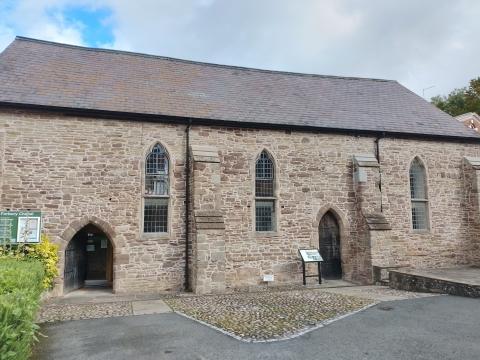
In 1282, John Peckham, Archbishop of Canterbury, visited Leominster to arbitrate in a dispute. The townspeople had accused the monks of Leominster Priory of failing to meet their spiritual needs, seeing as they received their tithes and dues. Peckham, who was a forceful character at the best of times and an unpleasant antisemite at the worst, resolved the quarrel by ordering a new church be built by the monks to serve as a church for the town, while the monks would still receive the people’s tithes and supply the clergy. Remarkably, Peckham paid for it with his own money, though he would have been entitled to require either side, or both, to find the cash. He was, of course, a very wealthy and powerful man, but it struck me as a compromise most likely to create peace. We tend to be freer spending others’ money than our own. Peckham, for his faults, put his money where his mouth was.
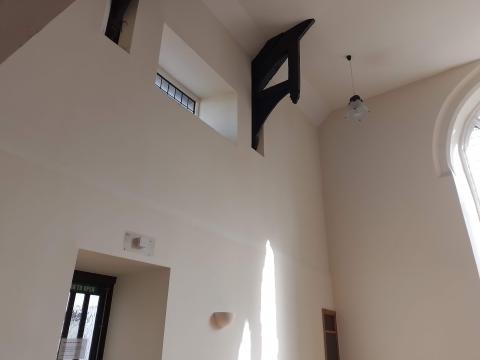
In 1283, the order to build was made, and the surviving Forbury Chapel is the result. The old monks have gone, and the townsfolk now regard the old priory as their parish church, the austere chapel now somewhat redundant. I am glad it survives, not only as an historical jewel, but a reminder about how we should use our wealth.
Use your money as a servant; it makes a very good one, but a very harsh master.
The rich man’s goods are his strong city: but the fear of the needy is their poverty. Proverbs 10:15, Geneva Bible
A D
- Log in to post comments
 Sunday Worship 10.45am & 6.00pm