
Quernmore Chapel
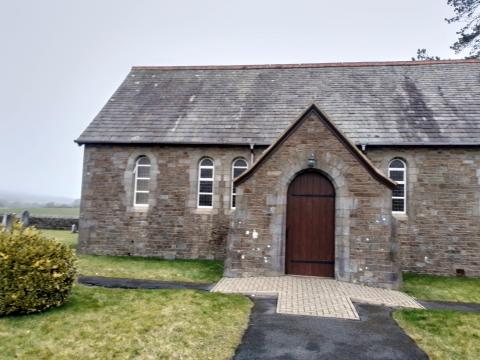
I spoke at Quernmore (pronounced Quor-mer) this month, a rare occasion of ‘preaching out’. I called at Salem first to switch on the heating but beheld the distant Bowland hills all covered in snow, which persuaded me to go the long way round via Lancaster. I needn’t have bothered, but better safe than sorry. I have a certain affection for Wyresdale, seeing as an ancestor of mine was once the parson and an ancestress began from there an act of domestic heroism.
The good folk of that chapel have successfully purchased their premises from the Methodist denomination, freeing them from London’s lunacy and local lethargy. The service was well supported with a good number of young people, families and older folk.
The word pagan comes from Latin paganus, which could mean rustic or countryside-dweller, deriving from pagus, which refers to a rural district. In the late Roman empire when Christianity prevailed in the towns but the old gods still dominated the backward, rural areas, ‘pagan’ came to mean a worshipper of the old gods. Today, our towns are increasingly pagan, while in rural areas, like Quernmore, Martin Top and elsewhere, the True God and His wonderful message of redemption are still faithfully proclaimed. Paganism has become inverted.
- Log in to post comments
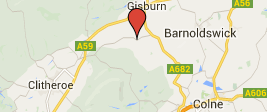
 Sunday Worship 10.45am & 6.00pm