
Salisbury Congregational Church
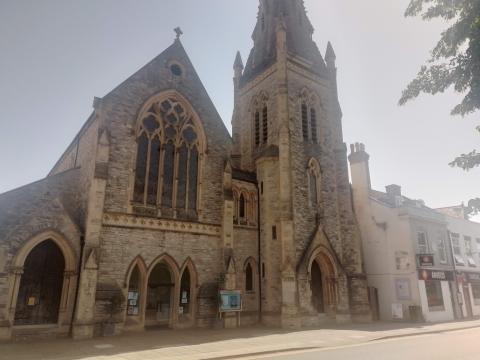
Salisbury’s URC (United Reformed Church) was originally Congregational and was built in 1878 but the church dates back much earlier. Its style of heavy gothic strikes me as ostentatious; Victorian Congregationlsits were too wealthy for their own good. The orginal church had been forged in the hot fires of persecution when the Commonwealth ended and the monarchy was restored along with Anglican Prayer Book in 1662. From St Edmund’s parish church, the puritan minister, Mr John Strickland, was ejected, and became a leading English dissenter, gathering the people of God to his independent congregation. He spent several spells in gaol but this zealous servant of God who had contributed to the Westminster Assembly of Divines was not easily discouraged. Anthony Wood (1632–1695), the Oxford biographer and anti-puritan historian, claimed that “he prayed several times blasphemously.” Dr. Edmund Calamy came to his defence:
“He might as well have said he used to come into his pulpit naked, and without a rag of cloths on; for the one is not more ridiculous to those who knew the man, than the other.”
The enemies of the people of God, and even of modest country pastors, will often make up nonsense to damage their reputations. It may not be as painful as prison, and sometimes it is as foolish as Wood’s, but the Lord will vindicate His own. Twenty-first century URC congregations are typically liberal in theology, but Salisbury’s had a faithful man of God at its first helm, despite what his detractors said of him.
Blessed are ye, when men shall revile you, and persecute you, and shall say all manner of evil against you falsely, for my sake. Rejoice, and be exceeding glad: for great is your reward in heaven: for so persecuted they the prophets which were before you. Matthew 5:11-12
A.
- Log in to post comments
 Sunday Worship 10.45am & 6.00pm
