
Statues of Chirk
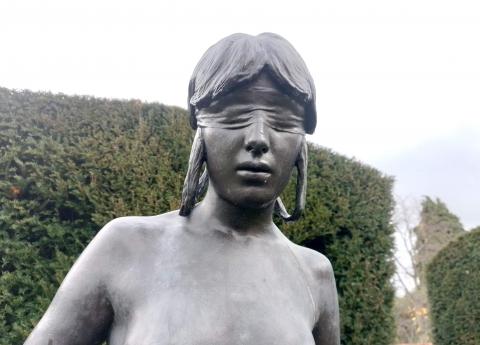
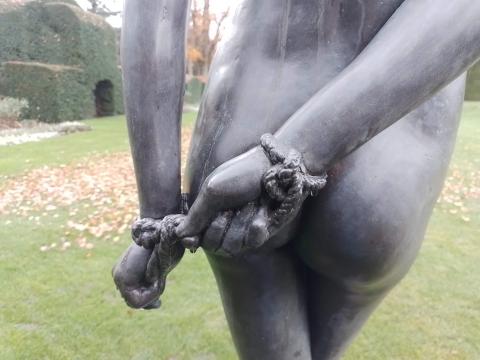
Two statues flank an opening in the hedge between the upper cross lawn, and the lower fruit tree lawn, in the East Gardens of Chirk Castle. Judging by their hairstyles, but not their clothes which are scanty to say the least, they are from 1910-1925. Assuming they were not just constructed for the sole purposes of aristocratic titillation, they seem to offer a strange message. One is blindfolded, while the other’s hands are bound. Though both statues depict beautiful women, these two rather essential functions of normal human existence are hindered by external means. One can see but cannot act; one can act but cannot see. Combined, they show us human fallenness. We often cannot detect our sin, calculating ourselves to be more righteous than we really are. When we do identify our corruption, our abilities to offer remedy are negligible. We may become ascetic, or indulge in ritual, or attempt to outweigh our sins with good deeds, yet none of these work. Helpless we are to effect our own salvation. Thus, salvation can only be by God’s unmerited grace and favour, freely bestowed and unilaterally prompted, or not at all.
Not the labours of my hands
can fulfil thy law's demands;
could my zeal no respite know,
could my tears forever flow,
all for sin could not atone;
thou must save, and thou alone.
Nothing in my hand I bring,
simply to the cross I cling;
naked, come to thee for dress;
helpless, look to thee for grace;
foul, I to the fountain fly;
wash me, Savior, or I die.
-Augustus Toplady
A D
- Log in to post comments
 Sunday Worship 10.45am & 6.00pm