
Brookhouse's Plague Stone
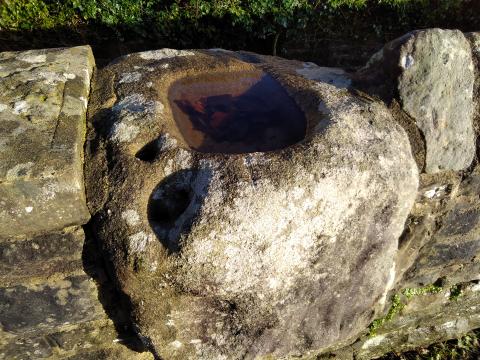
Approaching the old centre of the village of Brookhouse in Lancashire’s Lune valley is a supposed plague stone, opposite the Black Bull public house. These are found in many villages and usually date to the Great Plague of the 1660s (rather than the Black Death) though some may be Elizabethan. The Early Modern mind understood contagion but not the means. Not unlike the sanitiser stations which popped up in 2020, plague stones allowed infected villagers to leave disinfected money on the stone for farmers and traders to collect in return for goods which would be left on the spot, so none of the parties to the transaction had to get close. So although they thought that the coins might have been the means of transmission, the ‘social distancing’ they employed hindered viruses and bacteria from being exchanged.
It worked, because there are people around today who are descended from the survivors of those various plagues and pandemics. Yet in a sense, they were right about the money: wealth corrupts, gold bedazzles, riches destroy. Families, marriages, communities, and personal lives have all been made wicked by lucre and its frenzied pursuit. Would that we guarded against its evil effects as we do germs.
For the love of money is the root of all evil: which while some coveted after, they have erred from the faith, and pierced themselves through with many sorrows. 1 Timothy 6:10
A. D.
- Log in to post comments
 Sunday Worship 10.45am & 6.00pm