
Penlan Chapel, Pwllheli
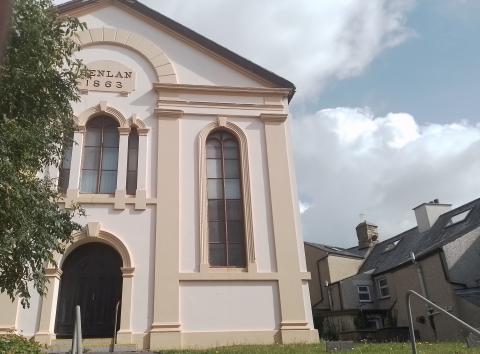
Penlan Chapel in Pwllheli, Gwynedd, is an attractive-looking Welsh Chapel. On its gable frontage is the datestone 1863, but its sign bespeaks an older heritage: 1646. Although little trace of its history is found online, it was evidently born in the fiery years of civil war. Wales was staunchly royalist and, therefore, decidedly Anglican (which was not the case in the 1800s); that an Independent Chapel, which we term Congregationalist, should have been planted here is extraordinary indeed.
The English Parliament (with Welsh MPs within in) passed An Act for The better Propagation and Preaching of the GOSPEL In WALES, and redress of some Grievances, which went onto explain
The Parliament of England taking into their serious consideration the great Duty and Trust that lies on them to use all lawful ways and means for the propagation of the Gospel of Jesus Christ in this Commonwealth...
It made several provisions, including:
…that godly and painful men, of able gifts and knowledge for the work of the Ministery (sic), and of approved conversation for Piety, may be imployed (sic) to preach the Gospel in the counties aforesaid (which heretofore abounded in Ignorance and Prophaneness) And that fit persons of approved Piety and Learning, may have encouragement to employ themselves in the education of Children in piety and good literature, Be it Enacted by the Authority aforesaid, That the said Commissioners, or any five or more of them, be and are authorized and enabled to grant Certificates by way of approbation to such persons as shall be recommended and approved…
In other words, the godless Welsh would benefit from the English Puritans’ governmental help in the spheres of religion and education. Many of these MPs were Congregationalist if not Presbyterian, so an opportunity to undermine Prayer Book-Anglicanism seemed too good to miss. Yet this Act was passed in 1649, and came into effect in 1650, some 3-4 years after Penlan Independent Church was formed. Whether some Parliamentary officer founded it during a respite from the fighting as happened in equally godless Cumberland, I cannot vouch. This congregation of God’s people and the wonderful, gospel truth it proclaimed was not likely the result of some legislation or governmental meddling, but individual believers meeting as directed by the Spirit of God and according to the principles of His Word.
May the great God of heaven, who was very much at work in Wales 1646, turn again His gracious eyes to godless England in 2026.
Rhosyn Saron yw Ei enw,
Gwyn a gwridog, hardd Ei bryd!
Ar ddeng mil y mae'n rhagori
O wrthddrychau penna'r byd;
Ffrind pechadur! Ffrind pechadur!
Dyma'r llywydd ar y môr.
Dyma'r llywydd ar y môr.
A D
- Log in to post comments
 Sunday Worship 10.45am & 6.00pm