
St Mary's Church, Thornthwaite
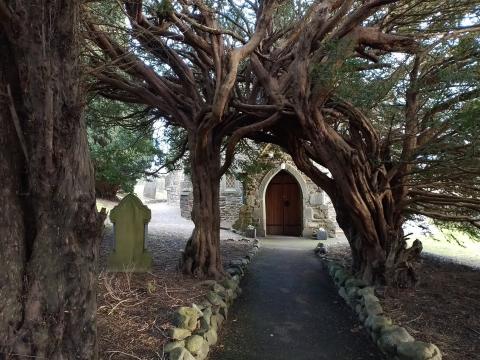
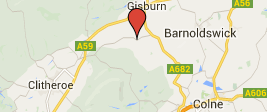
St Mary's Church at Thornthwaite in Cumbria is rather remote and somewhat hidden by the many twisted and gnarled old yews which attempt to shield it from view. When we arrived, a couple of central Europeans were employed in mending or servicing the organ, so the lights were on and the doors unlocked. Indeed, the lighting made it feel warm even if our bodies begged to differ.
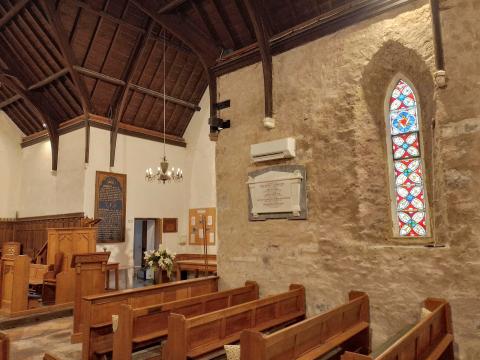
Some printed histories of the church were pinned to a noticeboard and named one James Cave who, in 1652, “was found fit to preach the Gospels”. I suspect that final ‘s’ is a typo, because the Commonwealth government did not simply appoint people who could read Matthew, Mark, Luke and John, but who could proclaim the wider good news of redemption by grace. A James Cave was instrumental in the setting up of the Congregational Church in Keswick, just two years later. I am almost certain it is the same man; I suspect that he soon tired of the state church structure which the Commonwealth and Protectorate governments largely left intact. A congregation of genuine believers rather than an assortment of folk who happened to live in the parish was a much more attractive model of church for close Bible-readers like Master Cave.
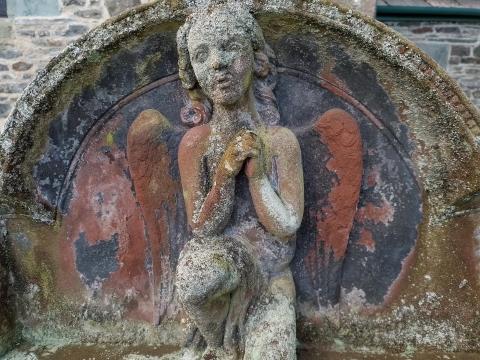
Curiously, a mid-Victorian grave stands without, depicting an angelic figure, hands clasped in thought. On account of discolouration and lichen, it appears strangely life-like, especially to people used to monochrome carvings, invariably shades of grey. So far, in this blog post, I have mentioned five dead persons, all of whom now reside with the Lord. Together, they are more colourful, more vibrant and more vital than ever they were on earth, no matter how dynamic and helpful their ministries. Whatever our role in church life and history, our future with Jesus Christ is always brighter and better than anything we have known below.
For I am in a strait betwixt two, having a desire to depart, and to be with Christ; which is far better. Philippians 1:23
A D
- Log in to post comments
 Sunday Worship 10.45am & 6.00pm