
Gracious Street
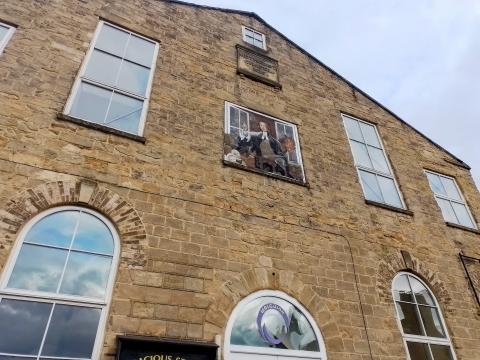
The Methodist Church in Knaresborough appears to have a fine old building with a rather peculiar painting of John Wesley and a horse’s head appearing out of one of the windows, beneath an 1815 datestone. The website indicates that the original building was demolished, and I failed to dedicate the time into researching the issue. Indeed, the website is rather good and I might be mistaken for thinking it an evangelical church but for the denomination that owns the deeds and sets the tone.
Buildings aside, it is its address which most grabbed my attention: Gracious Street. Not only is this a particularly beautiful name for any church, but its helpful website again offered explanation:
The attractive name of ‘Gracious Street’ takes it roots from the Anglo Saxon word which means “ditch houses” and refers to the houses which were built alongside the town ditch, which was probably an open sewer.
A beautiful name today has a rather unappealing origin. Yet that is why God’s grace as revealed in the gospel is so incredibly, amazingly, stupendously and magnificently amazing: He is kind and compassionate to people who deserve not just nothing, but His wrath and condemnation. He scours the sewers and dredges the ditches as He seeks the ugly, ruined and disgraced children of Adam, that He might forgive them, cleanse them, heal them and adopt them.
Grace! 'tis a charming sound
Harmonious to my ear;
Heaven with the echo shall resound,
And all the earth shall hear.
Grace first contrived the way
To save rebellious man;
And all the steps that grace display
Which drew the wondrous plan.
Grace taught my wandering feet
To tread the heavenly road;
And new supplies each hour I meet,
While pressing on to God.
Grace all the works shall crown,
Through everlasting days;
It lays in heaven the topmost stone,
And well deserves the praise.
-Philip Doddridge, 1740
A D
- Log in to post comments
 Sunday Worship 10.45am & 6.00pm