
Exeter Congregational
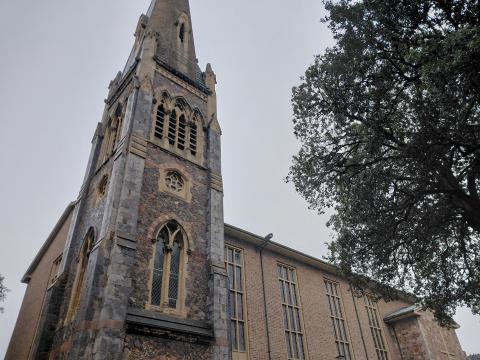
Southernhay United Reformed Church in Exeter was once the city’s leading Congregational church. Heavy German bombing in 1942 resulted in its near-destruction with only the impressive spire surviving. A female sitting at a desk by the door permitted me to inspect the insides, advising I turn on the lights, the switches of which I could not find. It was not a problem; the light was sufficient for my purposes, and my futile search for light had a powerful, metaphorical value.
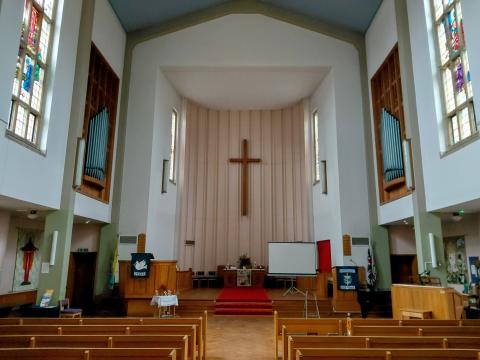
The post-war rebuild is very much of its time, for it oozes mid-twentieth century: the herringbone floor, the sea of light wood, the chancel with accompanying side pulpit (really? in a Congregational church?). Once it would have seemed modern and fashionable, but now it appears dated and old-fashioned. The church’s website and noticeboards were awash with Pride flags and contemporary emblems of liberalistic, ’progressive’ theology. Indeed, the eight points of the ‘Progressive Christianity Network’ were placed on an A-frame so even passers-by might contemplate the mysterious gospel of liberalism.
The rather comprehensive website even states the congregation’s relationship to the Bible:
Listening and seeking for God’s Word: We base our faith on the teaching of the Bible and subsequent experiences of God by those who follow Jesus. We recognise the Bible as a cradle of divine revelation. It was written over a period of hundreds of years by individuals and communities trying to express their ideas of God within the understandings and cultures of their times. We believe it is our task to interpret these writings for our own day and age. Our attempts to understand God are not static but continually evolving. We may explore answers to life’s questions – but none of us can claim to do more than offer our own experience of God as an aid to that exploration. Sometimes we have to learn to live with our questions but we believe our faith develops as we deal with anxiety and doubt.
In summary: believe what you want and make the rest up as you go along. In one respect, this seems cutting edge, a kind of finger-on-the-pulse theology for a post-modern Britain. In reality, it is already very dated, suffering a rather dog-eared pedigree:
For the time will come when they will not endure sound doctrine; but after their own lusts shall they heap to themselves teachers, having itching ears. 2 Timothy 4:3
A. D
- Log in to post comments

 Sunday Worship 10.45am & 6.00pm
