
Image of the King
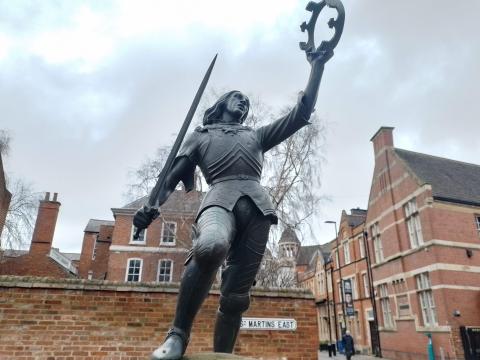
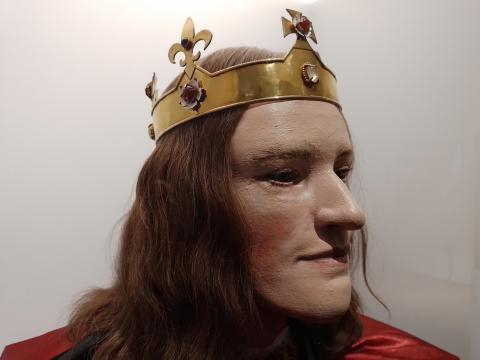
The English city of Leicester is awash with King Richard III themes, images and associations. This is the place at which his corpse was interred after Bosworth and reburied with greater dignity in recent years. This has worked wonders for local tourism and was one of the reasons for my own visit. In his dedicated museum, just across from the cathedral, is displayed one of those reconstructed heads made from the information gleaned from surviving skull. This allows us to see what the subject really looked like, without depending on an artist’s limited skill or political inclination. Although the hair’s colour and style cannot be detected from bone, nor the clothing, the resulting head made me feel like I was looking into the eyes of Dickon Plantagenet, the last Yorkist King of England.
Some people make representations of God but what I have concluded from our current Thursday night studies in the Book of Revelation is that He is utterly indescribable, even if one is an apostle benefitting from the Holy Spirit’s inspiration. What oil paintings and statues we find in large churches and galleries are therefore devoid of merit. Yet there is an accurate image of God to which we can all draw close, one that is living, breathing, accurate and authentic: a human being. Although the divine image is marred and broken, it may still be detected even in its imperfection and corruption. It is why the demons hate us and why the Christ came to save us, that the image be restored and harmony between creature and Creator renewed.
But we all, with open face beholding as in a glass the glory of the Lord, are changed into the same image from glory to glory, even as by the Spirit of the Lord. 2 Corinthians 3:18
A D
- Log in to post comments

 Sunday Worship 10.45am & 6.00pm