
Kitchens Lean & Fat (1650)
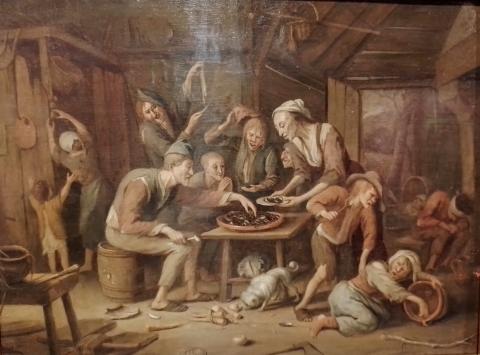
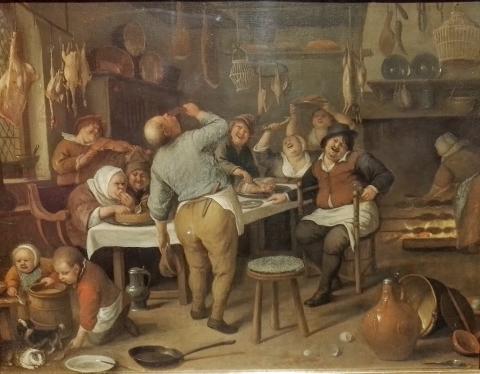
Jan Steen produced two paintings (now hanging at Cheltenham Art Gallery) in the early 1650s depicting kitchen scenes in a lower-class house. Each is inhabited by a large family but one is characterised by plenty, the other by scarcity. I suspect that the lean one was rather more representative than its rival though it is nice to think that some early modern peasants ate well from time to time. Be that as it may, both scenes are rather revolting. The impoverished one shows pinched faces and scrawny bodies, with children fighting over scraps. The second one depicts gluttons’ ever-expanding girths, with swollen bellies and round, jowly faces, all of which are unpleasant to behold.
Victorian Christians and social reformers beheld poverty and longed for church and state to address it. This happened, increasingly, throughout the twentieth century, so that by the mid-2020s, we spend more giving money to ‘the poor’ than workers contribute in their taxes. Previous governments ignored the plight of the needy; current ones reward laziness and subsidise indolence. Obesity used to be a sign of wealth; now, it denotes nothing but a lack of personal control.
One does not want to be so poor that food cannot be obtained, nor so wealthy that we guzzle it down, making our bodies as gross and noxious as our spirits.
Two things have I required of thee; deny me them not before I die: Remove far from me vanity and lies: give me neither poverty nor riches; feed me with food convenient for me: lest I be full, and deny thee, and say, "Who is the Lord?" or lest I be poor, and steal, and take the name of my God in vain. Proverbs 30:7-9
A D
- Log in to post comments

 Sunday Worship 10.45am & 6.00pm