
Papa Stour
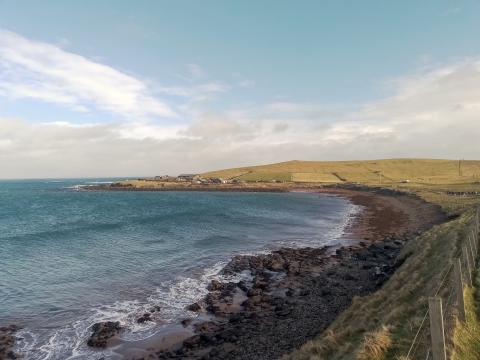
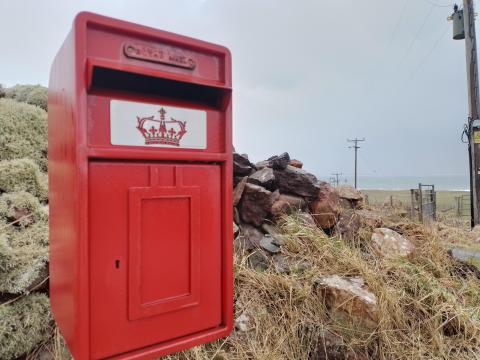
I write this on a small island off the coast of Shetland, Papa Stour. It is one of those places that even Shetlanders consider remote, curiously pondering why one should want to go there (much as some of the English ponder the virtues of going to any part of Shetland). One arrives via a forty-minute ferry crossing the choppy waters of the North Atlantic. The population is tiny (five) but recently boosted by a large family from New Zealand, and the amenities are accordingly small: a mile of tarmacked road between derelict croft houses, a disused airstrip, a ferry pier and waiting room, and a redundant church. The last two, however, have been generously stocked with kettles, tea and coffee as well even cans and biscuits. There are toilets and maps, all designed to make the visitor to this apparently inhospitable rock feel more comfortable. Oh, and there’s a functioning post box.
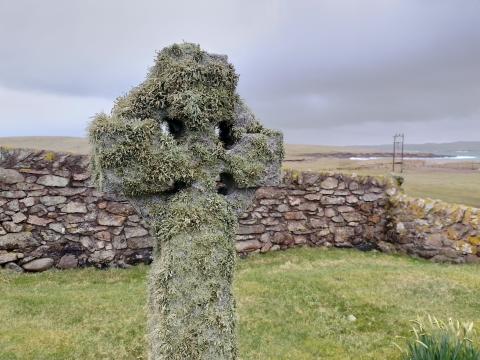
It seems remarkable that people in large towns and cities often find the bleakness and remoteness charcterising this island attractive. Its seclusion is a stark contrast to the crowded motorways and bulging trains of mainland Britain. Its peculiar name derives from the Old Norse for 'large island of priests'. It was here that early ascetic priest-monks disappeared to emulate the warmer exiles of the desert fathers down in Egypt and Syria. Fifteen hundred years ago, followers of the Lord fixed their eyes on this lonely place and determined to claim it for Him, a quiet and gentle repetition of the dispersal after the Flood and the more frenetic diffusion of Pentecost.
Today, naturally, the kirk no longer hosts regular worship, though it still retains a stock of Bibles and handmade, Christian coasters and trinkets, and I am told that Christians still live here. Even upon... no, let me start that again, especially upon distant rocks and barren places, do we find the Living God. It was He who created the continents and the expanses, but it was Cain who made the cities. Our affection for distant places uncorrupted by Man and his schemes and systems is surely a harking back to Eden, an acceptance of our original destiny’s pull and draw. Adam was not to sit loafing in his paradise, but to tend it, expand it and develop it, not with factories and banks, but with design, enhancement and order. This is why Papa Stour seems so attractive, I think. It is where we can be Adam and Eve again. It points us to the new heavens and earth, citizenship of which Christ Jesus freely offers to His people.
Sing unto the Lord a new song, and his praise from the end of the earth, ye that go down to the sea, and all that is therein; the isles, and the inhabitants thereof. Isaiah 42:10
A D
- Log in to post comments
 Sunday Worship 10.45am & 6.00pm