
In the Pleasaunce (1875)
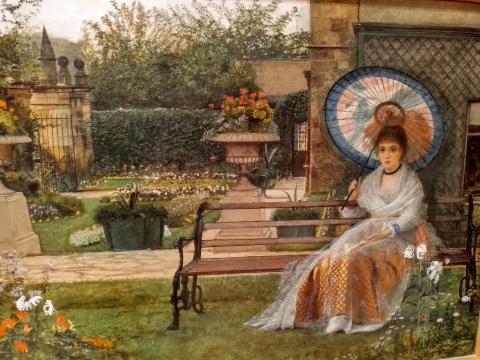
In the Pleasaunce by John Atkinson Grimshaw (1875) shows the artist’s wife at their home at Knostrop Old Hall. The garden is beautifully manicured and perfectly arranged, while Mrs Grimshaw’s clothing bespeaks wealth while her relaxed posture suggests happiness. Yet the pleasure does not seem to have worked its way to her face which, though pretty, is seemingly bereft of feeling. Whether she was tired or irritated at having to pose for her husband; or whether he wished to denude the lovely scene of any sense of narrative, I cannot tell. Yet a pleasureless face set amid a pleasure garden is indeed a story: why is she not happy?
King Solomon, writing in Ecclesiastes, describes his vast riches and achievements, and then observes:
So I was great, and increased more than all that were before me in Jerusalem: also my wisdom remained with me. And whatsoever mine eyes desired I kept not from them, I withheld not my heart from any joy; for my heart rejoiced in all my labour: and this was my portion of all my labour. Then I looked on all the works that my hands had wrought, and on the labour that I had laboured to do: and, behold, all was vanity and vexation of spirit, and there was no profit under the sun. (2:9-11)
While aiming at riches and pleasures, the aspiration drives us forward. Having obtained them, we realise that they were not worth the chase. We were made for relationship with God, and that is the only purpose and ambition which cannot end in disappointment. The gardens might be beautiful, the clothing well-made, the weather delightful and the roses sweet-scented, but unless the Lord God walks in the garden, it cannot be paradise.
A D
- Log in to post comments

 Sunday Worship 10.45am & 6.00pm