
Rokos' Rucus
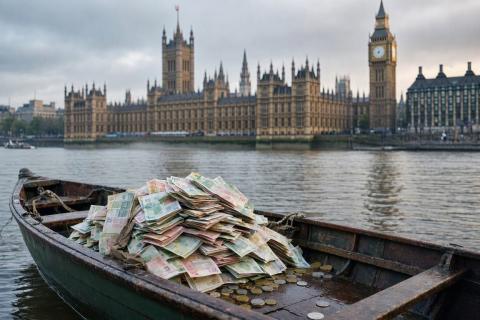
We are too heavily taxed. That is certainly the view of the The Daily Telegraph, which I read, and a great many taxpayers. The DT’s headlines warn:
Britain’s richest woman cuts 300 jobs after Labour tax raid: Bet365 founder reduces workforce by 3pc as levies on online sports betting are poised to rise and
Britain loses third-highest taxpayer to Greece: Billionaire City tycoon is the latest wealthy individual to leave the UK amid fears of a tax raid
The latter, Chris Rokos, paid £330 million to His Majesty’s Revenue and Customs last year, according to The Sunday Times. He will now subsidise the Greek treasury, and Britain will have to make up that £330,000,000 for this year and all future years by additional borrowing or taxing people who are poorer than him. I am generally unsympathetic to billionaires, but they do with their tax bills what we all do with our food menus: if it costs too much, we find somewhere else. By taxing too much, governments end up with less. Tony Blair and Margaret Thatcher, for their faults, seemed to understand this.
Four times in the New Testament are Jesus’ words about giving and taking recorded:
Matthew 13:12: For whosoever hath, to him shall be given, and he shall have more abundance: but whosoever hath not, from him shall be taken away even that he hath.
Matthew 25:29: For unto every one that hath shall be given, and he shall have abundance: but from him that hath not shall be taken away even that which he hath.
Mark 4:25: For he that hath, to him shall be given: and he that hath not, from him shall be taken even that which he hath.
Luke 8:18: Take heed therefore how ye hear: for whosoever hath, to him shall be given; and whosoever hath not, from him shall be taken even that which he seemeth to have.
The Lord is not teaching about economics here, and certainly not the failures of His Majesty’s Government, though it did remind me of the 'tax dilemma', called the Laffer Curve, in which lower tax thresholds can generate greater revenue for governments. When people are allowed to keep more of their wealth, they spend it, boosting the economy. If entrepreneurs migrate and take their money with them, the state’s bills go up, and its income goes down, and the poorer people must pay more: from what little they have, more is taken. Yet this is good news for the poorer people of Greece, whose government now enjoys greater income.
I fear for this land, but its economic woes are the least of its worries. Over such national problems, we have little control, but of our own lives, we are fully answerable. Are we good, responsible custodians of the Lord’s wealth (which means health, status and spare time as much as money), shrewdly using it and managing it, or are we squandering it? Will He give us more in the world to come, or less?
A D
- Log in to post comments

 Sunday Worship 10.45am & 6.00pm