
St Bridget's Church, Bridekirk
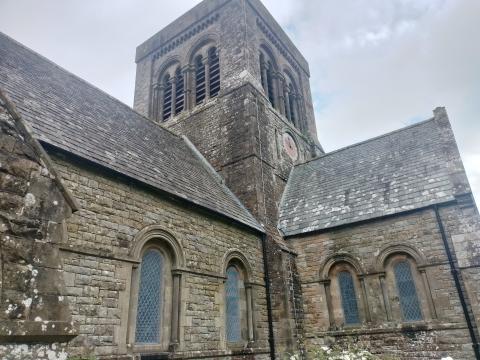
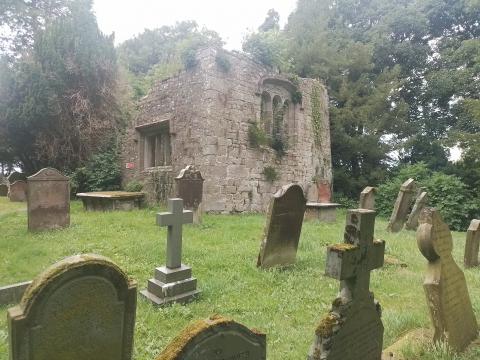
St Bridget's Church in Bridekirk, Cumbria, was built in the late 1860s. It replaced a twelfth-century building, the remains of which stand in the churchyard (below). Thankfully, the rebuilders decided to transport several of the original features, including a doorway, into the new construction, as well as the ancient font.
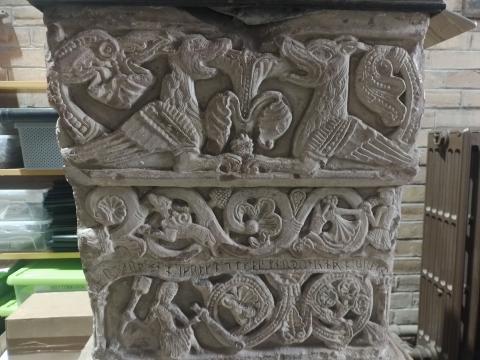
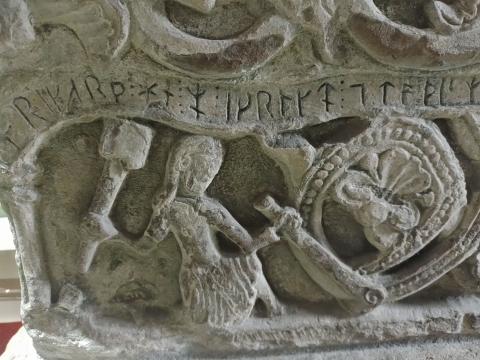
This font is truly wonderful. Although described as Norman, it has upon it the best example of Norse runes in England. This would normally suggest a Danish, pre-Norman date, but I understand that it translates into Old English rather than some Scandinavian tongue. It states "Rikarp he me iwrokt (wrought) merthr gernr me brokte (to this glorious place carefully brought me)" or "Rikarp he made me and brought me to this splendour". One translation retains something of a poetic charm and goes:
"Richard he me wrought, and to this beauty me brought."
Good for Rikarp. There is a short sequence towards the end of the end of the inscription which has yet to be satisfactorily deciphered, and may refer to the name of another who commissioned the object, or painted it.
As well as providing evidence of medieval lizards which ignorant moderns think had disappeared squillions of years ago, we are reminded that beautiful deeds for Christ outlive us. Richard of Durham would be long forgotten but for this font. All his other deeds, his witticisms, his musical skills, his party tricks and his reputation are all overlooked, but his beautiful font remains. Only what we do for Christ and others people will be worth remembering when we have departed.
For other foundation can no man lay, than that which is laid, which is Jesus Christ. And if any man build on this foundation, gold, silver, precious stones, timber, hay, or stubble, every man’s work shall be made manifest: for the day shall declare it, because it shall be revealed by the fire: and the fire shall try every man’s work of what sort it is. 1 Corinthians 3:11-13, 1599 Geneva Bible
A D
- Log in to post comments
 Sunday Worship 10.45am & 6.00pm