Tavern Interiors (c1680 & 1848)
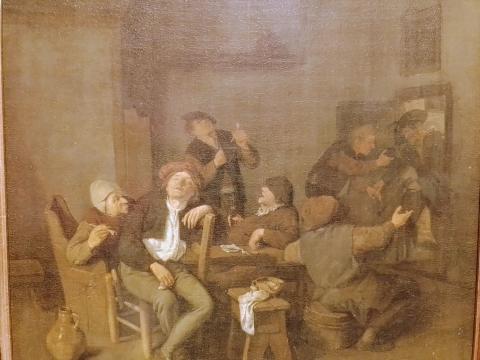
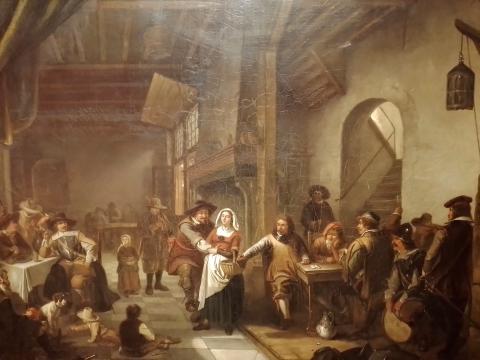
At Cheltenham’s Art Gallery hang two Dutch paintings with the same name which depict the same theme. Both show public houses and the various characters they are wont to attract. The earlier of the two, above, by Cornelius Dusart, is from 1680–1700, while the later one, below, was painted by Joseph le Roy in 1848. Le Roy was harking back, whereas Dusart was reflecting on contemporary life. I found it an interesting exercise to spot the difference: the scene as imagined and the scene as recorded.
The later picture is somewhat romantic: well-dressed people inhabit a large, roomy interior while children and musicians play. The earlier, more authentic scene just shows a group of humbly dressed men lounging at a table, a little worse for wear. Of course, Le Roy may have been imagining an upper-class tavern rather than the poorer, lower-class alehouse which Dusart paints, but I think it likely that the reality was poorer and less interesting than what later minds imagined.
It is too easy to look at the past and see golden ages, especially in the light of modern Britain. Yet the better times we imagine have often had the pain and hardship edited out of our recollections, all difficulties and opposition airbrushed away. The past was better than the present in many respects, but it was still part of the long and awful reign of sin and death. The Christian, God be praised, can always look forward to a literal paradise. No other religion, creed or ideology is ultimately able to deliver anything better than what we currently have, but Christ always offers a wonderfully better future. And for those who trust Him, He promises strength aplenty to bear the present, too.
Looking for that blessed hope, and the glorious appearing of the great God and our Saviour Jesus Christ; Who gave himself for us, that he might redeem us from all iniquity, and purify unto himself a peculiar people, zealous of good works. Titus 2:13–14
A.. D
- Log in to post comments

 Sunday Worship 10.45am & 6.00pm
