
Wolsey's Grave
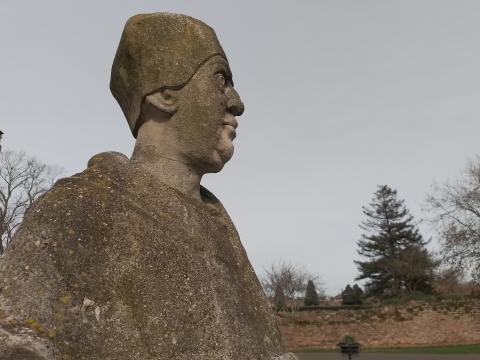
In January I went down to Staffordshire and gave a short talk on William Tyndale. Although it is the fourth talk on that great Bible translator I have given, I still felt underprepared and inadequate for the task. I also renewed my love for the man and his work, and not a few times found myself weeping as I read of his imprisonment and execution, all so my ancestors might read God’s word in plain English rather than scholarly Latin.
One of his chief opponents was Cardinal Wolsey, whose grave I visited last month at the site of Leicester Abbey. Although I am persuaded that old Wolsey had some personal virtues, and I salute his humble background, Tyndale’s more dangerous enemy, whom I think responsible for his arrest and death, was not the Cardinal, but ‘Saint’ Thomas More. Nevertheless, 'Wolfsee' still vigorously opposed the production of an English Bible and supported the Church of Rome with its false gospel and dubious doctrines.
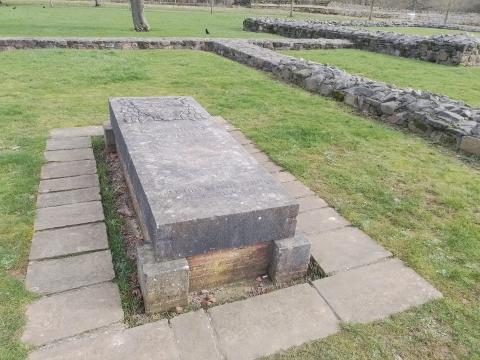
It felt strange, therefore, to rest my backside upon his memorial stone and eat a sandwich. Once the most powerful man in England and builder of Hampton Court Palace, he was a fearsome opponent. Yet for all his manoeuvres and politicking, his demise was little better than Master Tyndale’s. No, the real issue is not the indignity of their deaths, but the current location of their souls. Tyndale left behind his burning stake and flew up to be with His Lord whose word He had so faithfully and painfully published. Wolsey, according to his own belief, is sitting in the purgatorial fires burning off his many sins; by Tyndale’s theology, he is likely somewhere rather worse. We cannot confidently proclaim where individuals’ souls go upon dying; who knows what simple words are whispered to a merciful God from a dying throat or fading mind? Nevertheless, the evidence points one way, and I reflected upon this as I digested my lunch among those ruins. The grand tomb he had planned in Westminster Abbey came to nothing, and even this gravestone which served as my bench may not be the place under which he lays, for no record survives. So much for worldly splendour and power; so much for Rome’s false promises and soothing lies.
If I wait, the grave is mine house: I have made my bed in the darkness. Job 17:13
A D
- Log in to post comments
 Sunday Worship 10.45am & 6.00pm