
Council of the Angels
The chapel’s elders decided to punctuate our Thursday evening studies of Revelation with certain psalms. This would allow more pastoral intermissions, as well as affording me a break when poring over difficult passages. Furthermore, a number of the psalms contain eschatological material, which means they relate to the end times, a theme well associated with Revelation. Psalm 2, for instance, refers to the second coming of Christ and the final submission of all things, providing helpful Old Testament background to a more obviously New Testament concept.
Psalm 82, which we pondered two weeks ago, speaks of a mysterious assembly over which the Lord appears to preside, and concludes with a note of finality and judgement, as He judges the earth and claims all the nations:
1 God standeth in the congregation of the mighty; he judgeth among the gods.
2 How long will ye judge unjustly, and accept the persons of the wicked? Selah.
3 Defend the poor and fatherless: do justice to the afflicted and needy.
4 Deliver the poor and needy: rid them out of the hand of the wicked.
5 They know not, neither will they understand; they walk on in darkness: all the foundations of the earth are out of course.
6 I have said, Ye are gods; and all of you are children of the most High.
7 But ye shall die like men, and fall like one of the princes.
8 Arise, O God, judge the earth: for thou shalt inherit all nations. (King James Version)
What is this congregation or assembly of the elohim, the ‘gods’ or ‘mighty ones’? Has polytheism been introduced into scripture, along the lines of Mormonism or Hinduism? Presumably not, as there is only one true God.
Perhaps the 'gods' are human rulers the world over?
It could refer to earthly kings, emperors and presidents, and even localised judges and magistrates, who might have power of life and death. The Lord is ironically addressing them as gods because that is the way they behave, Biblical examples being the pharaoh of the exodus and Nebuchadnezzar of Babylon. They might act like so called gods, but they are still mortal and shall be judged, for they often bring instability and darkness to their places of jurisdiction. Yet they are still an extension of God’s rule, for human government is His gift, a means of limiting sin after the Fall. God will hold them to account, so they really ought to be careful and more diligent as they exercise their divinely derived powers, especially regarding the weak and the vulnerable, for whom the Lord has particular regard. They shall die like men because they are men; of their mortality, they need reminding.
Are the 'gods' specifically Israel’s rulers?
Israel’s kings and princes were God’s vice-regents over His people, privileged heralds of the new creation. Yet most of them, like Jeroboam and Ahaz, were corrupt, and deserved judgement. They had God’s law and knew what He expected of them, especially regarding the poor and defenceless, but they ignored this, making themselves ripe for judgement. They might have been eternally rewarded but shall rather ‘die’ like all other men in the spiritual sense, for they behaved like pagan kings, not godly regents. They are riper for God’s judgement on account of their possession of the privileges and promises, their special knowledge of God and His ways, which they neglected and squandered. Unlike the generality of princes the world over, they had access to divine revelation and would therefore be judged more severely. Yet why call them gods? Few of them were mighty, dancing a tightrope between the great empires of the middle east, and some of them were actually godly, like Josiah and Hezekiah.
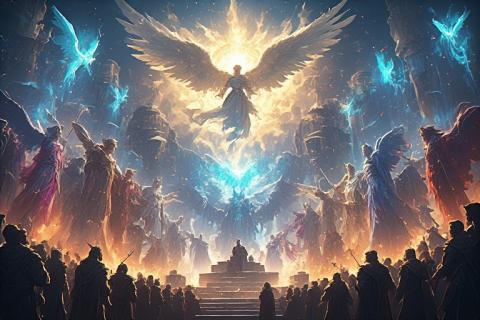
Might the 'gods' refer to some divine council of the angels?
Good, angelic beings may well gather before the throne of God to hear His counsel and share their thoughts. Why would such ones be accused of showing partiality to the wicked, though? How will they die like men, when they were faithful and remain eternal? Why are they being urged to defend the poor when the Lord already uses them for such ends?
Alternatively, is it as assemblage of wicked, fallen angels, or a mixture of the faithful and the faithless?
The book of Daniel seems to teach the possibility of territorial spirits. Although it is silent about other nations, Greece and Persia seem to have their own ‘princes’, while Michael seems to have some peculiar affinity to the Jews. If the world has been divided according to angelic principalities, powers and thrones, for instance, might there be occasional gatherings of this spiritual nobility, much like Parliament's House of Lords?
The prophet Micaiah reports in 1 Kings 22: 19-22:
19 And he said, Hear thou therefore the word of the Lord: I saw the Lord sitting on his throne, and all the host of heaven standing by him on his right hand and on his left.
20 And the Lord said, Who shall persuade Ahab, that he may go up and fall at Ramothgilead? And one said on this manner, and another said on that manner.
21 And there came forth a spirit, and stood before the Lord, and said, I will persuade him.
22 And the Lord said unto him, Wherewith? And he said, I will go forth, and I will be a lying spirit in the mouth of all his prophets. And he said, Thou shalt persuade him, and prevail also: go forth, and do so.
This appears to be some supernatural gathering: the Lord is there and at least one corrupted spirit seems to be present, as well as a large gathering of others. Is this some kind of council? There is certainly discussion and resolution, much as a Congress or committee would function. This same gathering may be alluded to in Job 1:6-12:
6 Now there was a day when the sons of God came to present themselves before the Lord, and Satan came also among them.
7 And the Lord said unto Satan, Whence comest thou? Then Satan answered the Lord, and said, From going to and fro in the earth, and from walking up and down in it.
8 And the Lord said unto Satan, Hast thou considered my servant Job, that there is none like him in the earth, a perfect and an upright man, one that feareth God, and escheweth evil?
Why are the angels (the Sons of God) gathering in heaven, including the Evil One, who participates in some discursive dialogue with God about the affairs of earth? Might this be the assembly of ‘gods’ or Mighty Ones to whom Asaph refers in our Psalm 82? It seems likely, but why would the Lord suffer the advice and entertain the contributions of these beings? Why must their views be heard? What wisdom could originate in creatures which chose to rebel against God despite seeing all His glory and beauty? Why are they even allowed into God’s presence if they have been banished and await judgement? Furthermore, why would the Lord urge them to be good and benevolent, defending the poor and needy, when these characters hate humanity and detest God’s love and purposes for them?
There is further indication in scripture that pagan gods are not just dumb statues but living, spiritual beings which derive pleasure and satisfaction from idolatrous human worship:
‘They made him jealous with other gods, they enraged him with abhorrent idols. They sacrificed to demons, not God, to gods they had not known; to new gods who had recently come along, gods your ancestors had not known about.’ (Deut. 32:16-17)
‘Do I mean then that food sacrificed to an idol is anything, or that an idol is anything? No, but the sacrifices of pagans are offered to demons, not to God, and I do not want you to be participants with demons. You cannot drink the cup of the Lord and the cup of demons too; you cannot have a part in both the Lord’s table and the table of demons.’ (1 Cor. 10:19-20)
Identifying pagan ‘gods’ with real supernatural beings also helps to explain another verse which puzzled our morning Bible study, found in Exodus 12:12:
‘For I will pass through the land of Egypt this night and will smite all the firstborn in the land of Egypt, both man and beast; and against all the gods of Egypt I will execute judgment: I am the LORD.’
The Ten Plagues certainly vexed the Egyptian people; the likes of Horus and Isis were exposed as powerless and ineffective, but was this a judgement in itself? Perhaps there were events in the unseen world occurring, too, of which the scriptures offer only dark hint. May the fallen angelic princes who had a stake in Egypt’s religious life have received a pummelling from God’s wrath, too? Well might Psalm 86:8 exult:
Among the gods there is none like unto thee, O Lord; neither are there any works like unto thy works.
Rather helpfully, the Lord Jesus Himself quotes Psalm 82 in one of His endless disputes with the Judean luminaries:
31 Then the Jews took up stones again to stone him.
32 Jesus answered them, Many good works have I shewed you from my Father; for which of those works do ye stone me?
33 The Jews answered him, saying, For a good work we stone thee not; but for blasphemy; and because that thou, being a man, makest thyself God.
34 Jesus answered them, Is it not written in your law, I said, Ye are gods?
35 If he called them gods, unto whom the word of God came, and the scripture cannot be broken;
36 Say ye of him, whom the Father hath sanctified, and sent into the world, Thou blasphemest; because I said, I am the Son of God?
(John 10:31-36)
Note that the context is an attempted stoning for claiming to be divine. The Lord rebuts them by quoting from the Law (ie the Hebrew scriptures) with which they would have been most familiar. They offer no counter argument, for they probably struggled to confidently interpret the psalm as much as we do. The Lord’s point is that the scriptures make it clear that there are ‘mighty ones’ other than God the Father, including God’s Son, and other, lesser beings, too. The Lord Jesus’ rebuttal is that their simplistic monotheism (which belies the Trinity) is at odds with the very scriptures they claim to cherish. He is not expounding Psalm 82 for its own sake, and barely explains the identity of the Mighty Ones, but He does offer a clue:
“Unto whom the word of God came”
A clue it is, but it does not give definite explanation for our purposes. Has the word of God come to global human rulers throughout time? In the sense that their ruling is mandated by heaven, possibly. To Israel’s kings, with their possession of the Law and prophets? Certainly, but this would hardly silence Jesus’ stone-wielding opponents if He was merely claiming to be an Old Testament-style king or elder, which would be both absurd and not relevant. How might angelic beings have received God’s word? Well, their knowledge of theology is impeccable. None of them doubt the Trinity, the incarnation or the existence of heaven and hell like foolish humans and benighted university theologians. They beheld God’s glory and splendour; they know the scriptures (see how Satan quotes them when tempting Jesus in the wilderness and the demon of Acts 19 knows about Jesus and even Paul). If ‘word’ means communicated knowledge of divinity, then it certainly came to them. If the phrase is being used in the sense of John 1 (‘The Word was with God, the Word was God)’) then it might be a reference to the Lord Jesus’ pre-incarnate existence when He appeared to them, perhaps when He created them at the very beginning.
Is your brain frazzled? Mine too. I write of things well beyond my understanding. Yet Psalm 82 was deliberately inspired and preserved that we might consider it and seek to understand it. Overall, I think it does refer to the third interpreation, to some supernatural gathering of powerful angelic beings, presided over by God Himsef. Why this body meets, and why the Lord continues to tolerate it, baffles me. It reminds me a little of the House of Commons when the Prime Minister appears to discuss national affairs but must also hear and respond to Opposition Members who might express thoughtful and worthwhile opinions but nevertheless wish him out of a job and resent his power and successes. Might the Great King of Heaven have chosen to restrain His great omnipotence and prerogatives by yielding to some pre-agreed cosmic constitution whereby He not only allows evil beings a degree of freedom ahead of the Judgement but suffers their continued membership of some Great Parliament or Congress until the great re-creation when their term comes to an end?
Using earthy constitutions and political structures to explain heavenly affairs seems like a fool’s errand. The truth is that we shall not fully understand Psalm 82 this side of the grave. Yet if it addresses itself to human rulers, even human rulers whose strings are pulled by cosmic rulers, there is some clear application for us. In whatever realm or sphere we have power and influence, we must use it for good, especially when it comes to helping the weak and needy. God is coming to judge and will hold us all to account. With the coming Judgement in mind, remember those who need our help and claim our aid. Live in the anticipation of coming death and the eternal accountability to which all shall be subject.
Arise, O God, judge the earth: for thou shalt inherit all nations.
A. D
- Log in to post comments

 Sunday Worship 10.45am & 6.00pm