
Removing the Ancient Lordships
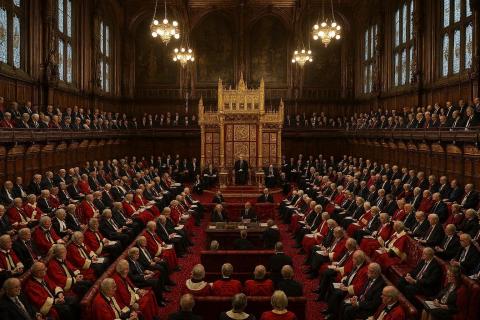
On first consideration, the existence of the remaining 92 hereditary peers (dukes, marquises, earls, viscounts and barons) in our Parliamant's second chamber seems indefensible. It is undemocratic, a leftover from our feudal past. Yet I shall miss them when they leave later this year. Take Charles Courtenay, for example, the Earl of Devon, who is hard working, erudite and intelligent. While preferring to remain, he refused to oppose his own removal, stating:
"I don't think we should be using the hereditary privilege we have in the Lords to haggle or negotiate for life peerages."
He entered the upper chamber in 2018 after inheriting his late father's title, which was first given to his ancestor in 1142. Then, the great landowning magnates were powers to be reckoned with and were required to be consulted in the passing of legislation and the administering of the realm. Now, with the popular voting and land ownership superseded by business and industry in the production of wealth, the old aristocrats are less vital to our government. Yet Lord Devon, like others of his class, were independently minded Crossbenchers, peers who owed loyalty to neither major party and therefore offered more independent analysis of national affairs. Many of the rest, apart from the 26 Anglican bishops, are appointed by politicians as a reward for services rendered or a pleasant, well-earned retirement from the House of Commons. Obliged to conform to party whips or to express gratitude to those who appointed them, their independence is questionable.
92 individuals have been removed who, even if they had a party affiliation, were there by right rather than appointment, after this parliamentary session. They shall be replaced by ‘Yes Men', ministerial mediocrities, cloth-eared retired Council chiefs and party donors. I therefore think, ironically, that our democracy has been harmed by the Earl of Devon’s departure, and not aided.
The hereditary principle is grounded in scripture. This does not mean that an unelected second chamber is 'biblical', nor that God necessarily approves of lords and ladies. The principle of inheritance, however, is found in the Old Testament regarding landownership and the Years of Jubilee. Furthermore, the people of God shall inherit eternal life, not because they have worked hard for it, nor because they have won some contest or poll, but because the rightful Heir of all things chooses to share with His beloved people those riches and treasures which are His by right.
A good man leaves an inheritance to his children’s children, but the wealth of the sinner is stored up for the righteous. Proverbs 13:22
A D
- Log in to post comments

 Sunday Worship 10.45am & 6.00pm