
Monksthorpe Chapel
Blue skies. Large, dry and brown (or yellow) fields. Flat landscapes and horizons dotted with medieval steeples. I have come down again to Lincoln’s shire.
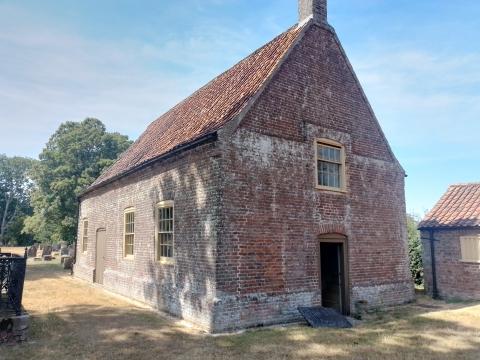
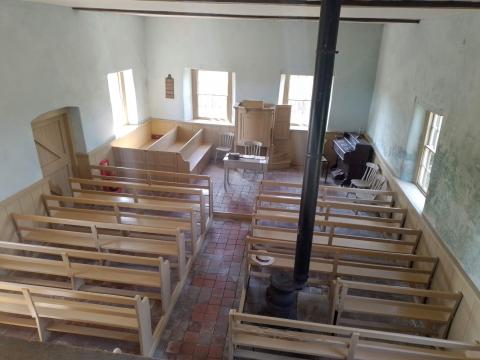
It was not a medieval steeple to which we called but an old Baptist chapel, Monksthorpe, now disused. It was built in 1701 though the internals might be early Victorian, including pulpit, potbellied stove and harmonium. The National Trust, which seems to be its guardian, lends the key at a charge of five pounds, while seemingly offering some misinformation about the site and its Baptist builders. For example:
By 1651, the Baptist cause had reached Lincolnshire and small groups were meeting for worship. As it was not safe for them to do so, they met in secret.
In 1651, there was general freedom of religion for protestants (some regions excepting Quakers). The lack of safety arose in the 1660s with the returns of the Stuarts. By 1655, some of the army officers whom Cromwell appointed during the Rule of the Major Generals were themselves Baptists.
Secondly,
When the building was built, Baptists were persecuted, so the chapel was built in the form of a farmyard barn, with a thatched roof and an escape hatch above the pulpit, so the preacher could make a hurried exit on a horse tethered outside, if necessary.
Baptists were not persecuted in 1701. Persecution ended in 1689 with the Act of Toleration under William III and Mary II. Dissenters certainly suffered discrimination (e.g. denial of a university education at Oxbridge) but there was no need to build escape hatches or engage look-outs. Neither is its agricultural appearance an attempt to hide it in the landscape. Justices of the Peace and their constables were local men who would have known perfectly well where nonconformists met; if they knew of such places when they were not legal they would surely have known about them when they were. Its simple, barn-like design simply bespeaks their humble means and their rejection of ecclesiastical decoration, such as the Church of England’s estate was pleased to employ.
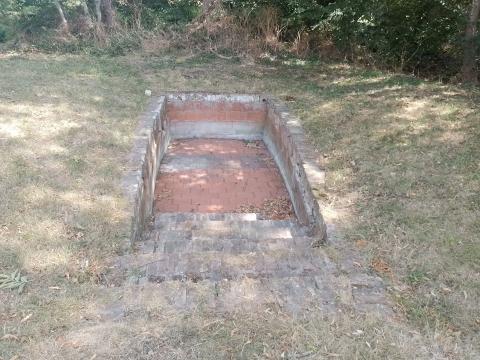
The plain pulpit is dominant, and a gallery allows extra auditors to hear God’s word read and preached. Having baptised three people the previous day in our graveyard, it was satisfying to see that the good converts of Monksthorpe Chapel were similarly dunked. They employed cold dyke water whereas we used what came out of the tap and attempted to heat it.
Much as I love an old parish church, I also admire the old chapels and meeting houses which were paid for without the help of taxes and tithes, but money freely given that God’s word be freely preached.
A D
- Log in to post comments
 Sunday Worship 10.45am & 6.00pm