
All Saints' Church, Didcot
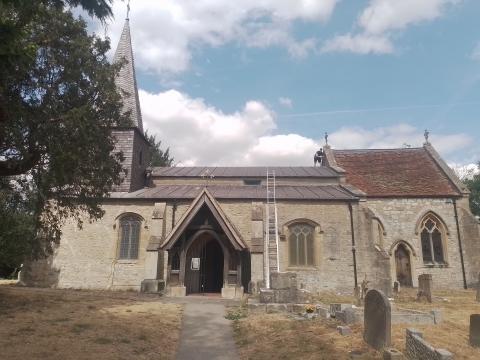
The town of Didcot in south Oxfordshire is largely bereft of beauty. Modern shopping precincts, trading estates and busy roads almost persuaded me that the visit was in vain. A 15-minute walk away from its centre through relatively modern housing brought me to old Didcot, with wooden-framed cottages and an ancient parish church. Two men were working on the roof when I called. They may have resented my photography, for they did not return greeting. Perhaps they were pinching the lead.
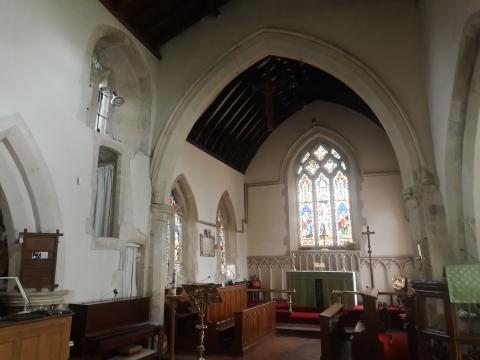
Within, the usual features were extant: a Norman font, an effigy of some long-gone abbot and the lower and upper doorways of the old rood, the wooden screen which separated the chancel from the nave which the Reformation saw fit to remove.
The church looked queer from without. As well as being built in various stages, with the respective architects making little effort to blend their contribution to that which already existed, the little tower and spire are clad in oak shingle. Its wooden frame could be seen within. Although I think it only Victorian, its use of wood somehow salutes the age of the rest of the building. Didcot is a strange name, and may derive from the words Dudda (a Saxon chieftain) and cote meaning home or shelter (think of 'dovecote' and 'cottage'). Thus it was a place where Dudda’s people sheltered and lived. Dudda is long gone, and his folk with him, but how many of Didcot's current denizens, who enjoy shopping in the new part, ever repair to the quieter, older part? From death, pain, guilt and sin should we flee, and only in Christ Jesus and His wonderful gospel is there safety and peace.
He that dwelleth in the secret place of the most High shall abide under the shadow of the Almighty.
I will say of the Lord, He is my refuge and my fortress: my God; in him will I trust.
Surely he shall deliver thee from the snare of the fowler, and from the noisome pestilence.
Psalm 91:1-3
A D
- Log in to post comments
 Sunday Worship 10.45am & 6.00pm