
St David’s Church, Exeter
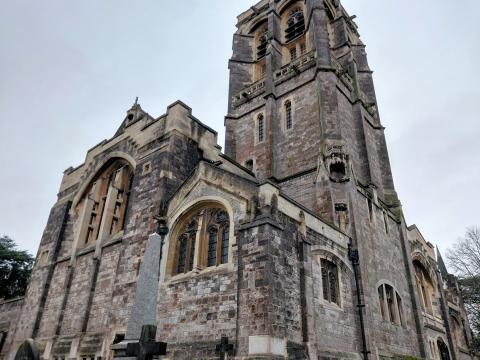
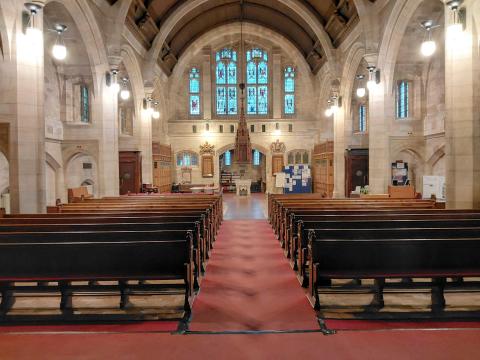
St David’s Church in Exeter was conveniently located between the city centre and the train station with which it shares a name and from which my return train to Bristol was to depart. I judged it to be Edwardian but later discovered it was late Victorian, being rather neatly completed in 1900, Victoria dying the following year. John Betjeman described it as the “finest example of a Victorian church…in the south west" of England. I cannot gainsay his claim, but I was delighted to find it left open despite its proximity to the local college, the students of which were enjoying their illicit substances in its shadow. Its large tower and smaller spires at its west end render it rather unusual, but I liked what I saw.
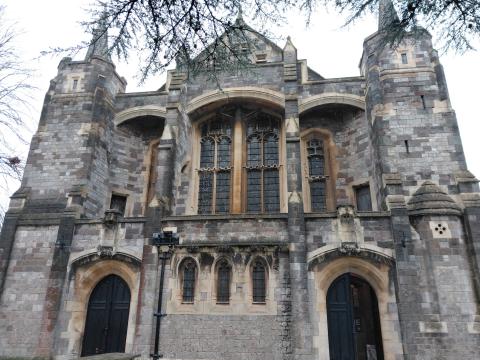
Curiously, although the site has occupied by a church since Saxon times, its immediate successor was begun in 1816 and completed in 1817, the same year our chapel was founded and our own building finished. Constructed in the rather fashionable manner of a Greek temple, it was demolished later that century because of its outdated style and parsimonious admission of light. Contrast Exeter’s temple of style to the Rimington weavers’ simple barn-like structure. That which was smart soon looked tired, whereas our plain chapel serves us just as well two centuries later. What the elegant folk of St David’s felt about classical in 1882, I now feel about gothic, though I suspect there are no lawful plans to knock it down again and rebuild according to twenty-first century pattern.
Architectural fashions wax and wane and theological fashions fluctuate, too, but unbelief and scepticism invariably lurk behind every new trend. I hope the clergy and laity of St David’s are as faithful to God’s word as their imposing building is a testament to late, gothic revivalism.
For the Lord is good; his mercy is everlasting; and his truth endureth to all generations. Psalm 100:5
A. D
- Log in to post comments
 Sunday Worship 10.45am & 6.00pm
