
Glasgow Cathedral
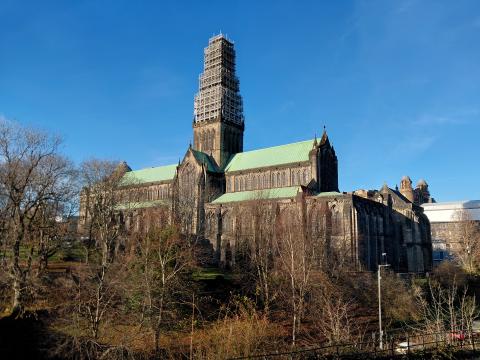
I came up to Glasgow yesterday morning. Like Lancashire’s Liverpool, this city once had a poor reputation but must surely be one of the most beautiful townscapes in the kingdom. One can just walk in any direction and see wonderful buildings, including churches, some of which shall be considered in future posts. Naturally, I called at the cathedral. I went there in 2018, so this is not one I may ‘tick off’ the list. Furthermore it is not really a cathedral, seeing as Scotland’s state church became Presbyterian (again) under William of Orange, so the cathedrals became High Kirks as they lost their bishops. What is commonly called Glasgow Cathedral is really the High Kirk or Parish Church of St Mungo. It is therefore the former cathedral of Glasgow, and only one of two among its nation’s vast array of ancient buildings to have survived the 1560 Reformation intact (the other being St Magnus’ at Kirkwall, Orkney, which I visited in 2024). The structure itself is impressive, and, unlike many of its English cousins, it does not charge the public for the privilege of looking around; canny Scots would not tolerate their cathedrals extorting admission charges like the docile English.
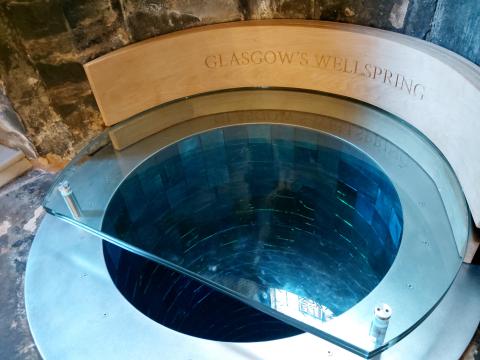
This ancient church was originally built around the tomb of Mungo, the peculiarly-named patron saint of Glasgow. He also goes by the alias of Kentigern, a name by which a number of Cumbrian churches go, suggesting he either founded them or he was held in high regard by those others who did (click here, here and here for examples). Mungo, which may have been a Gaelic pet name for this British-Welsh prince-turned-evangelist, means 'dear one', and he ministered on the site of the cathedral until he eventually was buried here, his tomb being marked in the ‘lower church’, below. This is close to the spring of water, now a well, by which he lived in the sixth century.
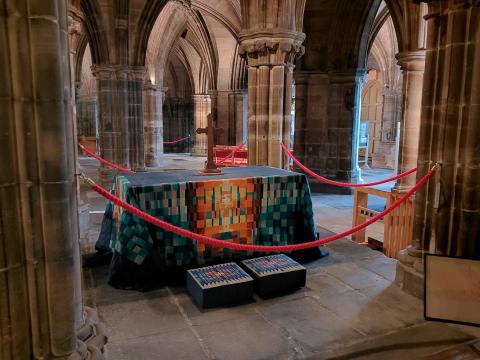
The medieval church transformed such venerable and holy men into miracle-working vessels of superstition, but I think they were sound, Bible-believing folk who would, ironically, have approved of the great Reformation which decluttered the churches and potentially limited their memory. Somehow, we should be grateful and appreciative of our great forbears, without idolising, venerating or revering them more than the great God whose faithful servants they were.
For it hath been declared unto me, my brethren, of you by them that are of the house of Chloe, that there are contentions among you. Now this I say, that every one of you saith, I am Paul’s, and I am Apollos’s, and I am Cephas’s and I am Christ’s. Is Christ divided? was Paul crucified for you? either were ye baptised into the name of Paul? 1 Corinthians 1:11-13, Geneva Bible
A.D
- Log in to post comments
 Sunday Worship 10.45am & 6.00pm
